

In today’s dynamic financial landscape, creditworthiness plays an essential role in accessing loans and credit facilities. Individually, the CIBIL score is widely recognised as a benchmark for creditworthiness. However, when it comes to businesses, particularly micro, small, and medium enterprises (MSMEs), a specialised credit ranking system known as CMR, or CIBIL MSME Rank, serves this purpose. This article dives deep into what the CMR full form stands for, how it works, its importance, and how businesses can leverage it for better financial access.
What is the CMR full form?
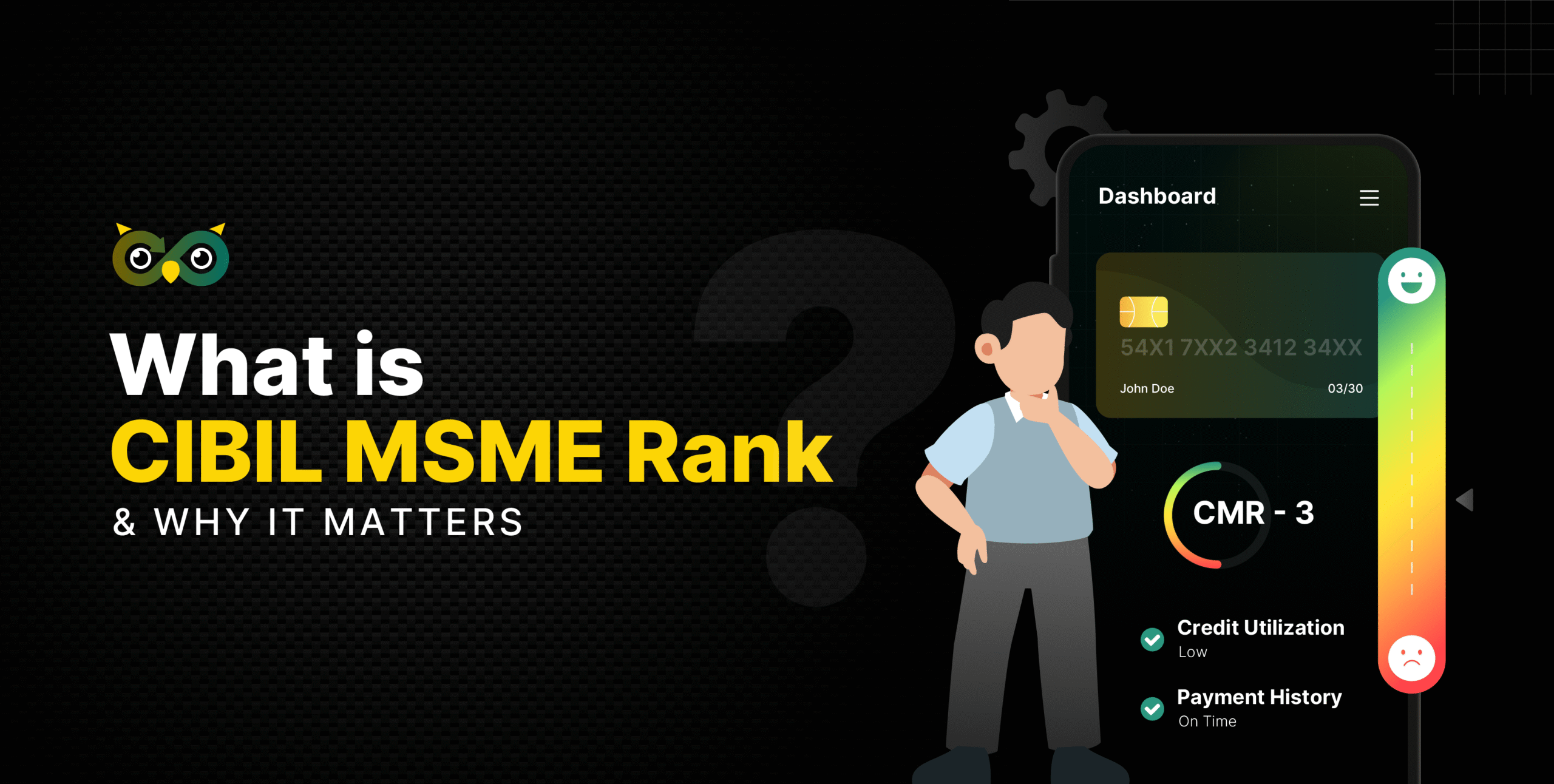
The full form of CMR is CIBIL MSME Rank. It is a comprehensive credit risk ranking devised by TransUnion CIBIL to evaluate the creditworthiness of MSMEs. Unlike an individual’s credit score, which ranges between 300 and 900, the CMR uses a scale from 1 to 10.
- CMR 1: Represents the lowest risk and highest creditworthiness.
- CMR 10: Indicates the highest risk and lowest creditworthiness.
This rank helps lenders gauge the chances of an MSME defaulting on loan repayments and thus make informed lending decisions.
How is the CMR calculated?
The calculation of the CMR involves analysing multiple financial and behavioural factors in the enterprise over a period, primarily focusing on the last 24 months. Key components influencing the CMR include:
- Credit History: Records of past loans and credit availed by the MSME. A longer and positive credit history improves the rank.
- Payment Behaviour: Timeliness and consistency in repaying dues significantly impact the rating. Late payments or defaults lower the rank.
- Outstanding Debt: Higher credit exposure or unpaid debt can reduce creditworthiness.
- Liquidity Profile: Analysis of fund utilisation patterns and the MSME’s ability to meet short-term financial obligations.
- Firmographics: Business-specific parameters such as age of the company, industry type, ownership structure, and location.
- Credit Utilisation Ratio: Proportion of utilised credit compared to available limits. Lower utilisation usually results in a better rank.
- Credit Enquiries: Frequent loan applications signal higher risk and can negatively affect the score.
Together, these parameters offer a granular view of an MSME’s financial health and credit management, enabling lenders to predict the risk of default over the next 12 months.
Why is the CMR Important for MSMEs?
The CMR rating plays a crucial role in the loan approval process for MSMEs by:
- Facilitating Faster Loan Approvals: Financial institutions use CMR as an objective measure to evaluate credit risk, thus reducing loan processing time.
- Improving Loan Accessibility: MSMEs with low CMR ranks find it easier to access loans and credit facilities at favourable interest rates.
- Guiding Interest Rates: Lenders price loans based on the risk profile indicated by the CMR, rewarding businesses with lower risk ranks.
- Supporting Portfolio Management: Lenders use CMR to monitor and manage their MSME lending portfolios with better risk assessment.
- Helping MSMEs Track Credit Health: Knowing their CMR helps businesses understand their credit standing and take steps to improve it.
Understanding the CMR Rank Range
| CMR Rank | Risk Level | Interpretation |
| 1 to 3 | Low Risk | Businesses with excellent credit behaviour, easy loan approvals. |
| 4 to 7 | Moderate Risk | Businesses with some repayment irregularities, may face some hurdles in loan approval. |
| 8 to 10 | High Risk | Businesses highly likely to default, face difficulty securing loans and higher interest rates. |
A business’s rank can fluctuate based on changing financial behaviour and credit utilisation, underscoring the importance of maintaining good financial discipline.
How Can MSMEs Improve Their CMR?
Improving the CMR is essential for enhanced credit access and better terms from lenders. MSMEs can take the following measures:
- Timely Loan Repayments: Avoid late payments; even a few missed payments can affect the rating.
- Optimal Credit Utilisation: Maintain credit utilisation below 75%, ideally under 30%, to project lower dependence on credit.
- Avoid Frequent Loan Enquiries: Limit the number of hard enquiries as excessive loan applications reflect financial stress.
- Maintain Financial Stability: Keep a steady flow of revenues, manage working capital efficiently and ensure liquidity.
- Clear Outstanding Debts: Settle previous dues before applying for new credit.
- Use Financial Trades Wisely: Make full use of facilities like Cash Credit and Overdrafts without over-utilisation.
- Monitor and Correct Errors: Regularly check the credit report and rectify any incorrect or outdated information by raising disputes with CIBIL.
How to Check Your CMR?
MSMEs can check their CMR through the official TransUnion CIBIL website by following these steps:
- Register with company details such as name, PAN, GSTIN, and contact information.
- Pay the registration fee (approx. INR 3,000).
- Upload necessary KYC documents for verification.
- Receive the CMR report via email after successful registration.
Note: CMR is typically generated for MSMEs with credit exposure between ₹10 Lakhs to ₹50 Crores. Businesses outside this range may not have a CMR or it might show as ‘NA’.
CMR vs CIBIL Score: What’s the Difference?
| Feature | CIBIL Score | CMR (CIBIL MSME Rank) |
| Full Form | Credit Information Bureau (India) Limited | CIBIL MSME Rank |
| Applicability | Individuals and Businesses | Micro, Small, and Medium Enterprises (MSMEs) |
| Scale | 300 to 900 (higher is better) | 1 to 10 (lower is better) |
| Purpose | Assess individual creditworthiness | Assess MSME credit risk |
| Factors Considered | Credit history, repayment, credit mix | Credit behaviour, liquidity, repayment track, firmographics |
| Usage | Loan, credit cards & mortgage approvals | MSME loans and credit evaluation |
Both are crucial, but CMR is uniquely tailored to evaluate MSMEs’ credit risk comprehensively.
FAQs
Q1: What does CMR stand for in the context of credit scores?
A1: CMR stands for CIBIL MSME Rank, a credit rating specifically for micro, small, and medium enterprises designed to assess their creditworthiness.
Q2: Who assigns the CMR and how often is it updated?
A2: The CMR is assigned by TransUnion CIBIL and is updated regularly based on the latest financial data and repayment behaviour of the MSME.
Q3: Can a business outside the ₹10 Lakh to ₹50 Crore credit limit get a CMR?
A3: Traditionally, only MSMEs within this credit exposure range receive a CMR. However, recent changes allow some MSMEs with credit exposure below ₹10 Lakhs to also obtain a CMR.
Q4: How does a high CMR affect my business?
A4: A high CMR (closer to 10) indicates higher credit risk, which can lead to loan rejections, higher interest rates, and difficulty in securing funds.
Q5: How can MSMEs improve their CMR score?
A5: MSMEs can improve their CMR by maintaining timely repayments, optimising credit utilisation, reducing loan enquiries, settling old debts, and regularly monitoring their credit reports.
Conclusion
The CMR full form, as CIBIL MSME Rank, is a critical metric for MSMEs seeking financial aid. It helps lenders assess credit risk accurately and swiftly, enabling responsible credit allocation and fostering business growth. For MSMEs, understanding and improving their CMR can unlock easier access to loans, better interest rates, and stronger financial credibility, essential for thriving in a competitive market.